Justin Guitar case study
See how we helped Justin Guitar cut CPI to $0.79, boost installs by 100%, and triple engagement using lo-fi UGC, emotion-led hooks, and a high-velocity creative testing strategy.
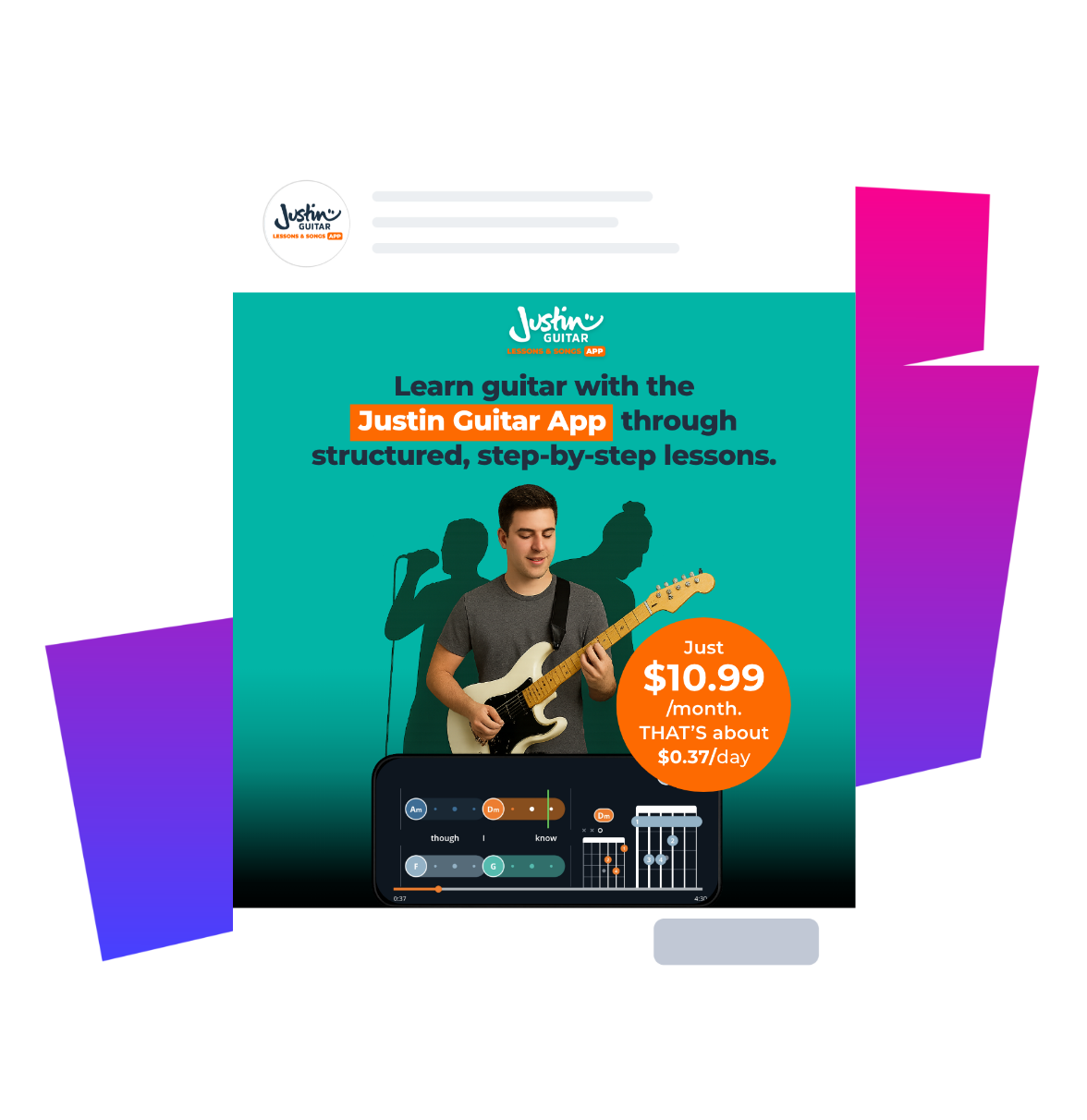

-
+100%
Uplift in App installs
-
$0.79
lowest CPIs
-
3.4%%
CTR
-
$0.09
CPC down to
How we scaled Justin Guitar app installs by 100% whilst slashing CPI and lifting CTRs
Justin Guitar had brand power, teacher credibility and a massive YouTube following—but early campaigns missed the mark on TikTok and Meta. Ads leaned too heavily on polished lesson walkthroughs, with mid-funnel features treated like top-of-funnel value. What worked on the web didn’t translate into performance on social. CPIs were high, scrolls were quick, and curiosity died early.
They came to us to refine their creative strategy, lower CPIs, and convert curiosity into installs. We built a performance creative strategy grounded in emotion, tension, and proof—replacing features with friction and polished formats with scrappy storytelling. The result: a compounding system where UGC scaled, hooks cut through, and app installs came in at volume and efficiency.
- Justin Guitar needed a creative strategy and system that could scale TikTok and Meta efficiently, without losing brand tone or teacher credibility. The goal: hit cost-per-install targets under $2 while growing volume MoM.
But their performance was being capped by three issues:
- Creative formats mismatched expectations: Ads looked too curated, failing the thumb-stop test. Static UI and slide-style walk-throughs blended in with paid noise.
- Messaging was upside down: Feature-led, but friction was missing. The emotional moment of “I think I’m failing at this” never showed up, so the payoff lacked punch.
- Creative fatigue and cadence issues: Top formats weren’t being leveraged or iterated quickly enough. No test schedule, no modular chassis, no scale path.
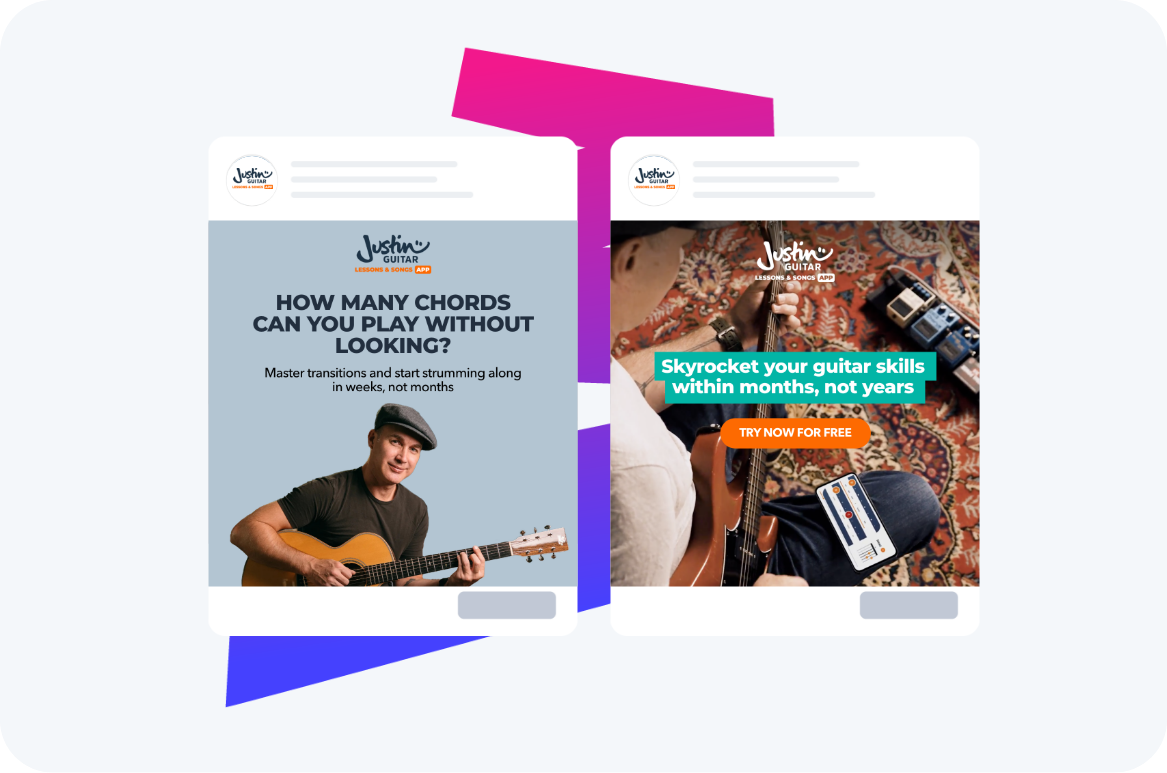
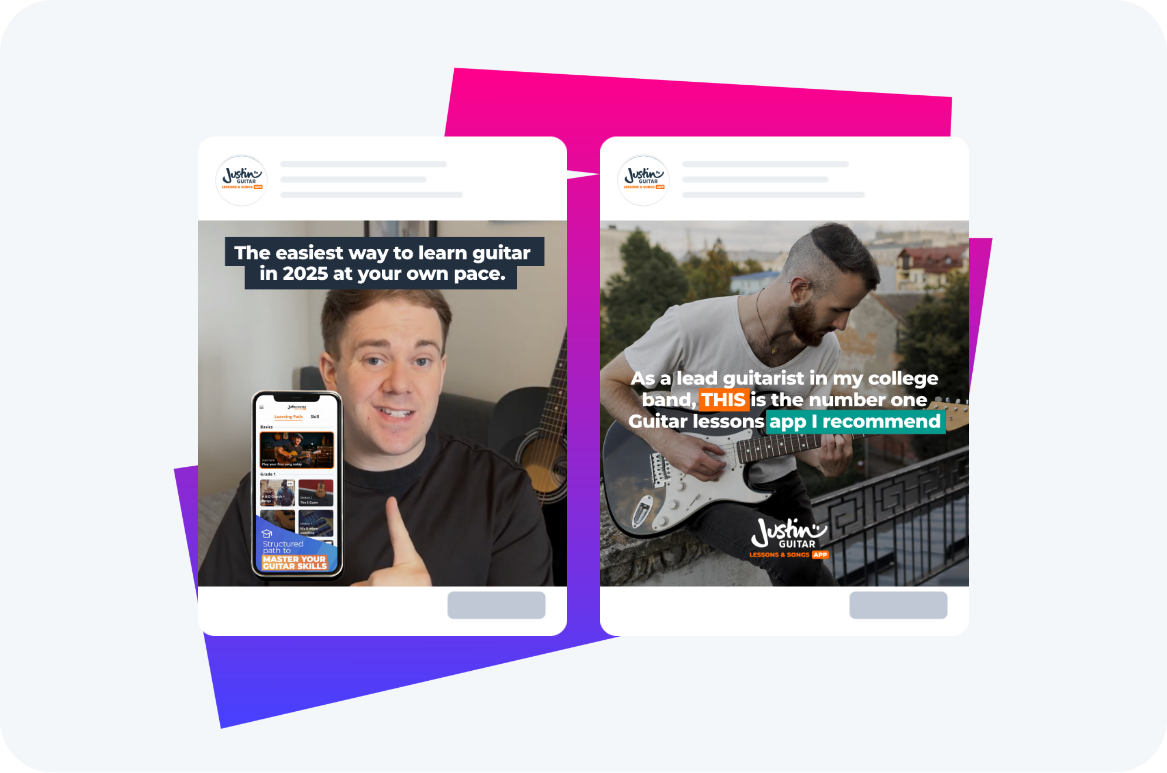
We devised a platform-specific creative strategy and built a UGC-led system rooted in emotional insight, with modular testing and creative rotation at its core. The goal wasn’t just volume—it was learning and efficient creative velocity.
1) Anchor creative in resonance, not value props
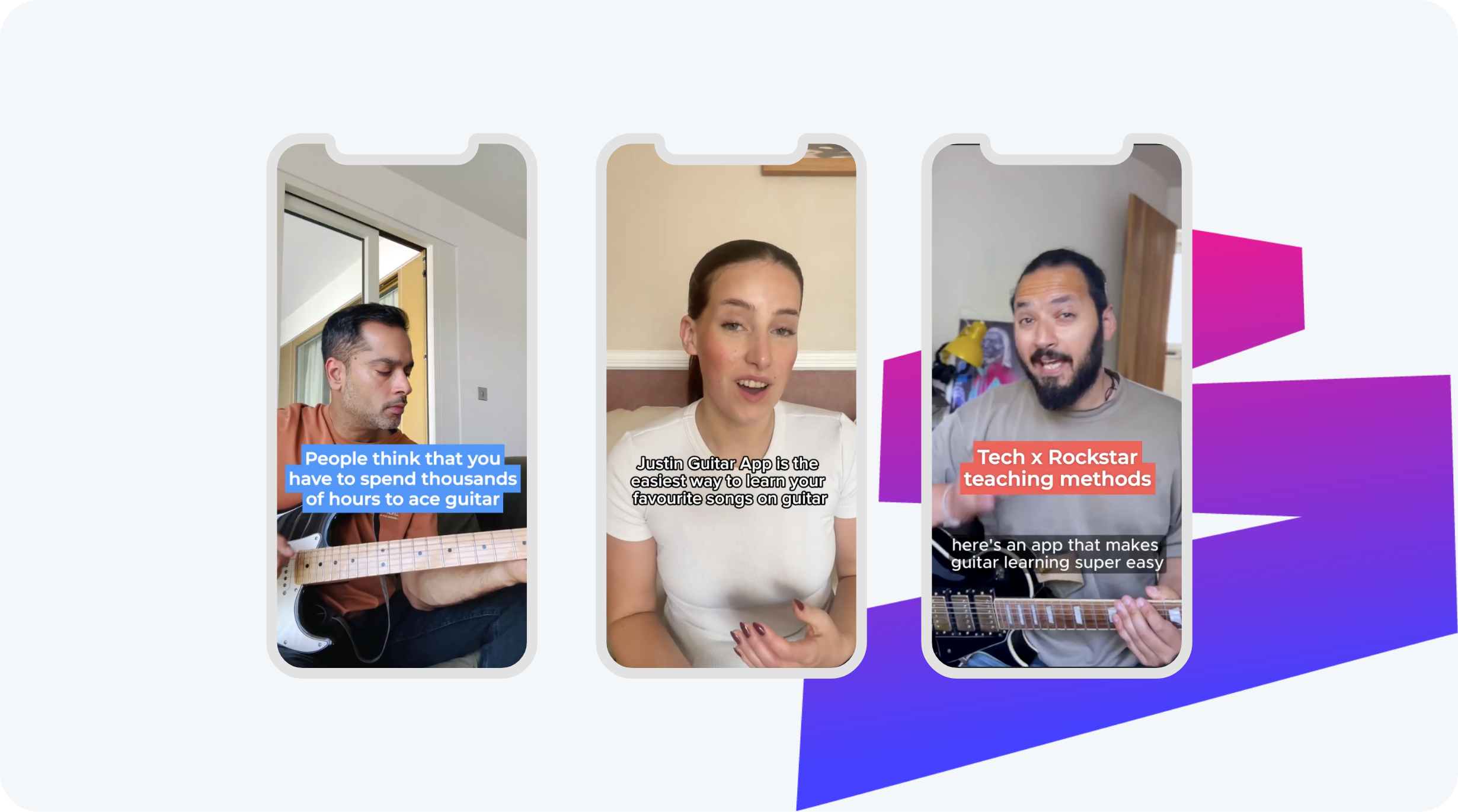
The strongest ads led with frustration: “Struggling with chords?” “My partner asked if I should sell my guitar.” Instead of starting with value, we started with self-doubt—building curiosity and click intent before the app was ever shown. We layered fast payoffs into 6–10s: app walkthroughs, progress reveals, or a ‘before/after’ moment.
2) Build a chassis that scales
All winning ads followed a loose format: lo-fi selfie, hook that names the tension, proof within 10 seconds, CTA by 12–15s. We scaled that structure across variants: partner validation, UGC from learners, teacher-led challenges (“How many chords do you know from memory?”). Pink/white hook cards and genre-specific tests added scale depth.
3) Set up a testing rhythm that learned fast
We installed a 2-week test-and-scale cycle, with naming conventions, asset logs and hook-level reporting. Winners were cut into new variants; underperformers were killed fast. This gave us continuous iteration across top angles like “partner judgement”, “price comparison”, and “quick-win” chord demos.
4) Shift budget to the proven formats
Once CPI dropped and click volumes rose, we moved the budget away from curated UI explainers into our top UGC styles. We capped runtimes, compressed mid-sections, and pushed the payoff earlier in each edit. “Real humans, real struggles, real proof” became the blueprint.
Within weeks, the creative system moved from scattered outputs to an organised scalable performance creative engine. CPIs fell, installs grew, and creative became the single biggest driver of platform efficiency.
Headline impact
- Installs increased 100%+
- CPI dropped as low as $0.79
- CTR peaked at 3.4%
- CPC dropped to $0.09
Funnel economics
- UGC scaled cleanly: Low-fi authentic ads drove 3× more engagement than statics and held attention deep into the video.
- Social validation outperformed: Narratives around social proof—“my partner asked if I should quit”—beat price or promo-led hooks.
- Mid-funnel assets worked harder: Once intent was established, screenwalks and feature demos closed the loop without needing discounts.
- Hi-fi formats were retired: Anything that felt curated underperformed. Rawness equalled trust.
Creative drivers of growth
- Lo-fi UGC with a narrative structure led performance
- Chord-finder demos and progress reveals improved retention
- Question-led hooks delivered 2–4× stronger CTRs
- Soft CTAs (“Play your first song in 30 days”) beat hard sells
- Visual consistency (pink/white cards) helped recognition across campaigns
Justin Guitar’s success wasn’t about gimmicks. It was about leaning into what real users feel when they try to learn something hard—and showing them how they’ll feel when they get it right.
Related Success  stories

The Gut Stuff case study
We transformed The Gut Stuff’s paid media strategy with new funnels, optimised keywords, fresh assets, and precise audience targeting. This resulted in a 100% ROAS boost on Meta, a 48% sales increase via Google Ads, and a 117% drop in CPA.
How did we do it?

Empress Mimi case study
Empress Mimi's revenue soared 89%! Catchy subjects, templates, and strategic tweaks. Read our case study for the full story!
How did we do it?
Where’s next for your brand?
No matter where you are in your marketing journey, our dazzling team of specialists will keep you moving, show you how to grow, and help you actualise the vision you’ve always secretly had for your brand.